1. /
  2. ...
  3. /
  4. Legacy modernization services for healthcare systems
Engineering

Legacy modernization services for healthcare systems

Modernize your healthcare systems without disrupting care.

Healthcare application modernization services that delivers

We are an engineering team with deep experience modernizing healthcare across the US and EU.

4.2M+

Patient records migrated

Across all engagements

0

PHI data loss incidents

Across all migrations

62%

Average IT maintenance budget reduction in Year 1

Post-modernization

6

Weeks. Phase 1 delivery time

System discovery & roadmap

Trusted by industry leaders

Trusted by leading healthcare organizations who demand excellence at every stage of development.

Arklign - Flyant client
GazeHealth - Flyant client
CipherHealth - Flyant client
Ensora Health - Flyant client
Abbott - Flyant client
OpenRad - Flyant client
GoodShape - Flyant client
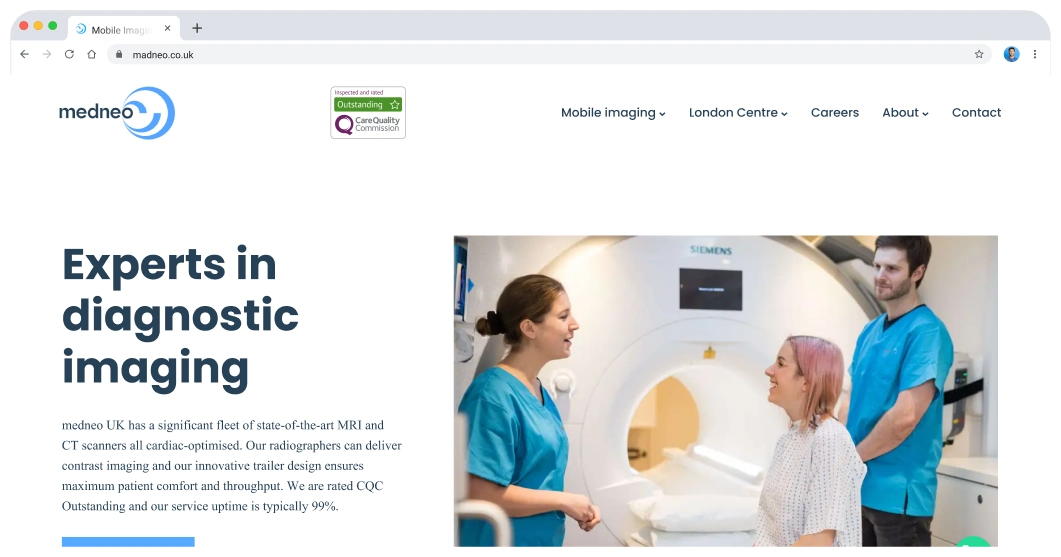
Medneo - Flyant client
Thrive Mental Wellbeing - Flyant client
Health Hero - Flyant client

End-to-end healthcare legacy modernization services

We modernize healthcare infrastructure — migrating organizations to secure,
interoperable systems — so they can:

Modernize legacy EHR, billing, and clinical systems using current technologies

Implement new architectures that reduce compliance risk and operational cost

Harness modern integration standards including HL7 and FHIR R4

Embrace scalable platforms that support telehealth, AI, and data exchange

Legacy EHR platforms were built for a different era of healthcare. We migrate and re-architect clinical systems to support modern workflows, real-time data exchange, and full HIPAA and FHIR R4 compliance, with a phased approach that keeps care delivery uninterrupted throughout. Our team will help you to:

  • Migrate from monolithic EHR platforms to modern, interoperable architecture
  • Ensure HIPAA and FHIR R4 compliance throughout the transition
  • Preserve clinical data integrity with zero downtime during migration
  • Improve system performance and clinician workflow efficiency

Disconnected systems cost your organization more than IT resources, they cost clinical accuracy and operational speed. We design and implement HL7/FHIR-compliant APIs that integrate your EHR, billing, imaging, lab, and third-party platforms into a unified, exchange-ready ecosystem. Our team will help you to:

  • Build HL7/FHIR-compliant APIs across your clinical and operational stack
  • Eliminate data silos between EHR, billing, lab, and imaging systems
  • Enable real-time data exchange with external partners and payers
  • Lay the integration foundation for telehealth, patient portals, and AI tools

On-premise infrastructure limits your ability to scale, respond, and innovate. We transition your clinical applications and patient data to a secure cloud environment — AWS, Azure, or Google Cloud — with architecture designed for healthcare compliance requirements from day one. Our team will help you to:

  • Select the right cloud architecture for your compliance and operational needs
  • Migrate clinical applications and patient data with full auditability
  • Reduce infrastructure costs and eliminate end-of-life hardware dependency
  • Accelerate deployment cycles and improve system availability

Fragmented patient data is both an operational burden and a compliance liability. We consolidate legacy databases, eliminate redundancy, and migrate to audit-ready platforms — ensuring data integrity, availability, and the foundation your analytics and AI initiatives depend on. Our team will help you to:

  • Consolidate fragmented patient data into a unified, governed environment
  • Upgrade legacy databases to scalable, secure, and audit-ready platforms
  • Maintain uninterrupted availability of critical clinical systems
  • Build a reliable data foundation for analytics, reporting, and AI

Manual processes in claims, prior authorization, and clinical documentation carry real costs — in time, accuracy, and staff capacity. We implement RPA, machine learning, and predictive analytics that reduce operational overhead and give your teams more bandwidth for work that matters. Our team will help you to:

  • Automate claims processing, prior authorization, and billing workflows
  • Implement predictive analytics for clinical decision support
  • Eliminate manual errors across administrative and operational processes
  • Reduce staff workload without compromising accuracy or compliance

Poor interfaces slow down clinical staff, increase error rates, and accelerate burnout. We redesign legacy healthcare applications around the people who use them daily — delivering intuitive, modern UI that improves adoption, reduces training time, and supports better patient interactions. Our team will help you to:

  • Redesign legacy clinical interfaces for speed, clarity, and usability
  • Reduce staff training time and onboarding friction
  • Improve patient-facing experiences across portals and digital touchpoints
  • Increase adoption rates across clinical and administrative teams

Modernization doesn't end at go-live. We provide continuous performance monitoring, security patching, regulatory updates, and technical support — so your systems remain compliant, stable, and capable of evolving alongside your organization. Our team will help you to:

  • Monitor system performance and resolve issues before they impact operations
  • Apply security patches and regulatory updates as standards evolve
  • Upgrade libraries, tools, and integrations on an ongoing basis
  • Provide regular reporting on system health, compliance status, and roadmap progress

Why healthcare companies choose Flyant

Most software partners can modernize a system. Fewer understand what's at stake when that system touches patient care.

Healthcare-specific experience

We don't apply a generic playbook to clinical systems.

Compliance-first architecture

Compliance requirements are scoped in Phase 1, not retrofitted at the end.

Zero-downtime delivery

Parallel-run methodology with module-by-module cutover, no big-bang go-live.

0 PHI data loss incidents

Across all migrations, backed by contractual SLA.

You own everything

Every map, document, and architecture decision produced is yours permanently.

No vendor lock-in

We work within your existing cloud, EHR contracts, and infrastructure.

Speak with our engineering team for a complimentary system assessment

Legacy modernization case studies

How we deliver modernization

Our healthcare legacy software modernization services are built around one principle: modernization should never put care delivery, data integrity, or regulatory standing at risk.

We map everything before we touch anything.

We conduct a full inventory of your legacy system: every dependency, every custom business rule, every HL7 interface, every downstream data consumer. We document what institutional knowledge currently lives in engineers' heads and what exists only in 15-year-old code comments. We produce a clinical-system impact map that shows exactly which workflows are affected by each phase of modernization — and how we will protect them.

Deliverables for this phase
  • Legacy system dependency map (full codebase and integration inventory)
  • Clinical workflow impact assessment (per department, per role)
  • HIPAA / FHIR / TEFCA compliance gap analysis
  • Phase 2–4 roadmap with milestones, timelines, and risk ratings
  • HIPAA BAA executed prior to data access

Your legacy system stays live. The new system is built alongside it.

Using the Strangler Fig architectural pattern, we build the modernized system in parallel with your existing one. Your clinical operations continue without change. At each module milestone, we validate behavioral parity across three dimensions: clinical workflow outputs, compliance audit trail accuracy, and integration data fidelity. Nothing goes to the next phase until the current one matches the legacy output exactly — or improves on it with documented sign-off.

Deliverables for this phase
  • Parallel environment with staging access for clinical stakeholders
  • Behavioral parity test reports at each milestone
  • FHIR R4 API validation against USCDI data requirements
  • Staff training access to new system (parallel, no pressure)
  • Weekly migration status reporting to CIO/CTO stakeholders

Module by module. Department by department. No single moment of total system exposure.

Cutover happens in controlled increments, not as a single go-live event. Each module transitions only after clinical and compliance stakeholders have signed off on the validated parallel version. The legacy system remains active as a fallback until the final module cutover is complete and the post-cutover stability period has passed. If any module shows unexpected behavior in production, rollback to the legacy module is immediate — without affecting the modules already live.

Deliverables for this phase
  • Signed clinical and compliance stakeholder sign-off per module
  • Rollback procedure tested and documented before each cutover
  • Real-time monitoring dashboard during cutover window
  • Communication templates for clinical staff, department heads, and board
  • OCR-ready audit package available at cutover completion

Modernization does not end at go-live. Neither does our responsibility.

The first 90 days after full cutover are the highest-risk period for any modernized system. Flyant engineers remain embedded, monitoring system behavior, performance, and compliance posture. We proactively address edge cases that only surface in production, optimize workflows based on real clinician feedback, and keep your compliance documentation current as regulations evolve. Your team does not inherit a system and a bill. You inherit a functioning, supported environment.

Deliverables for this phase
  • 90-day hypercare support with SLA-backed response times
  • Proactive HIPAA and FHIR compliance monitoring
  • Quarterly security posture reviews
  • Architecture roadmap updates aligned with regulatory changes
  • Training and documentation updated as clinical workflows evolve

Technology stack & integration expertise

The systems your organization runs on. The standards your compliance team requires. The platforms your engineering team already knows.

Epic

Cerner

Meditech

Allscripts

athenahealth
eClinicalWorks

NextGen

Greenway Health

HL7 v2 / v3

FHIR R4 / R5

USCDI

TEFCA

CDA / C-CDA

DICOM
X12 EDI

IHE profiles

AWS (GovCloud, HIPAA-eligible services)

Microsoft Azure (Azure Health Data Services)

Google Cloud (Healthcare API)
Hybrid & private cloud

Snowflake

Apache Kafka

Databricks

PostgreSQL

Microsoft SQL Server
Oracle DB

MongoDB

Redis

Kubernetes

Docker

Terraform

GitHub Actions

HashiCorp Vault

AWS KMS

Azure Active Directory

Python

TensorFlow

Azure AI

AWS SageMaker

UiPath (RPA)

Microsoft Power Automate

Salesforce Health Cloud

Twilio

MyChart API

Apple Health / Google Health integrations

Modernization strategies we follow

Not every system needs the same solution. We match the right strategy to your clinical environment, risk tolerance, and timeline.

Lift & shift

Move your healthcare applications to the cloud with minimal changes to the existing codebase — reducing infrastructure costs without re-architecting clinical systems.

Use cases
  • Your systems are stable but running on costly, outdated on-premise infrastructure
  • You need to reduce operational overhead without disrupting clinical workflows
  • Full re-architecture isn't feasible within your current timeline or budget
What you get
  • Fastest path to cloud with the lowest migration risk
  • Reduced infrastructure and maintenance costs from day one
  • A foundation to layer modernization improvements over time

Augment & refactor

Restructure your codebase to improve performance, interoperability, and compliance — without replacing the systems your clinical teams depend on.

Use cases
  • Your EHR or clinical platform needs FHIR R4 / HL7 compliance but a full rebuild isn't justified
  • You need to introduce new integrations or features that legacy architecture can't support
  • Performance and scalability issues are affecting clinical or operational teams
What you get
  • Improved system performance and interoperability without full replacement
  • Reduced long-term maintenance costs and technical debt
  • Compliance-ready architecture that supports evolving regulatory standards

Complete rewrite

Rebuild outdated clinical or operational systems from scratch when maintaining them costs more — in risk, budget, or lost capability — than starting fresh.

Use cases
  • Your legacy system is no longer supported by the vendor or cannot be patched for compliance
  • The cost of maintaining and extending the existing system exceeds the cost of rebuilding
  • You need a future-proof platform that supports AI, analytics, and modern care delivery models
What you get
  • A purpose-built healthcare system designed for your current and future needs
  • Full compliance with HIPAA, GDPR, and FHIR R4 from the ground up
  • The ability to leverage cloud-native infrastructure, AI, and modern integration standards

Schedule a consultation — we'll assess your environment and recommend the right strategy

Get in touch

You have a vision. We have the expertise and resources to get you there.

Frequently asked questions

Timeline depends on system complexity, integration depth, and the number of clinical modules involved. Our healthcare legacy application modernization services follow a structured framework — from 6-week discovery through phased cutover — with most engagements reaching full go-live between 7 and 10 months. We scope a detailed timeline with milestones in Phase 1, before any development begins.
Yes. Our legacy modernization services for healthcare systems are built around a parallel-run methodology, meaning your existing environment stays fully operational throughout the entire process. Clinical staff continue working in the legacy system while the new one is built, tested, and validated alongside it. Cutover happens module by module, not as a single go-live event.
A HIPAA BAA is executed before we access any patient data. All environments used in our legacy healthcare app modernization services are isolated, access-controlled, and audited throughout. We maintain a zero PHI data loss record across all migrations — backed by contractual SLA.
Yes. Our legacy system modernization services for healthcare don't require vendor changes or new platform commitments. We work within your existing EHR environment, cloud contracts, and infrastructure. There is no vendor lock-in, and every deliverable — architecture maps, documentation, migration assets — is permanently yours.
That depends on your system's current state, compliance gaps, vendor support status, and operational risk tolerance. In Phase 1 of our healthcare legacy software modernization services, we assess all of these and recommend the most appropriate strategy — whether lift-and-shift, augment-and-refactor, or complete rewrite — with a documented rationale tied to your specific clinical and regulatory context.
Every module cutover within our legacy systems modernization services for healthcare is preceded by a tested rollback procedure. If unexpected behavior appears after a module goes live, rollback to the legacy version is immediate — without affecting the modules already running on the new system. No single cutover event exposes your entire clinical environment at once.
Our team remains embedded for a minimum 90-day hypercare period — a standard part of our healthcare legacy application modernization services — monitoring system performance, addressing production edge cases, and keeping compliance documentation current. After hypercare, we transition to ongoing maintenance covering security patching, regulatory updates, and quarterly architecture reviews.
Yes. Every engagement under our legacy modernization services for healthcare systems scopes compliance requirements in Phase 1 and builds them into the architecture from the start — not retrofitted later. Deliverables include FHIR R4 API validation against USCDI data requirements, a full HIPAA/FHIR/TEFCA compliance gap analysis, and an OCR-ready audit package at cutover completion.

Didn’t find the answer you are looking for?

Contact us

Need help with healthcare
engineering or QA?