- /
- ... /
- medneo

Performance Optimization and Infrastructure Modernization for a Radiology Information System
Stabilizing, optimizing, and future-proofing a high-load Radiology Information System for a rapidly growing provider of MRI and CT scanning facilities.
client
medneo
cooperation
3 years
country
UK & Germany
industry
Healthcare / Diagnostic imaging
product
Radiology information system (RIS)

About the platform
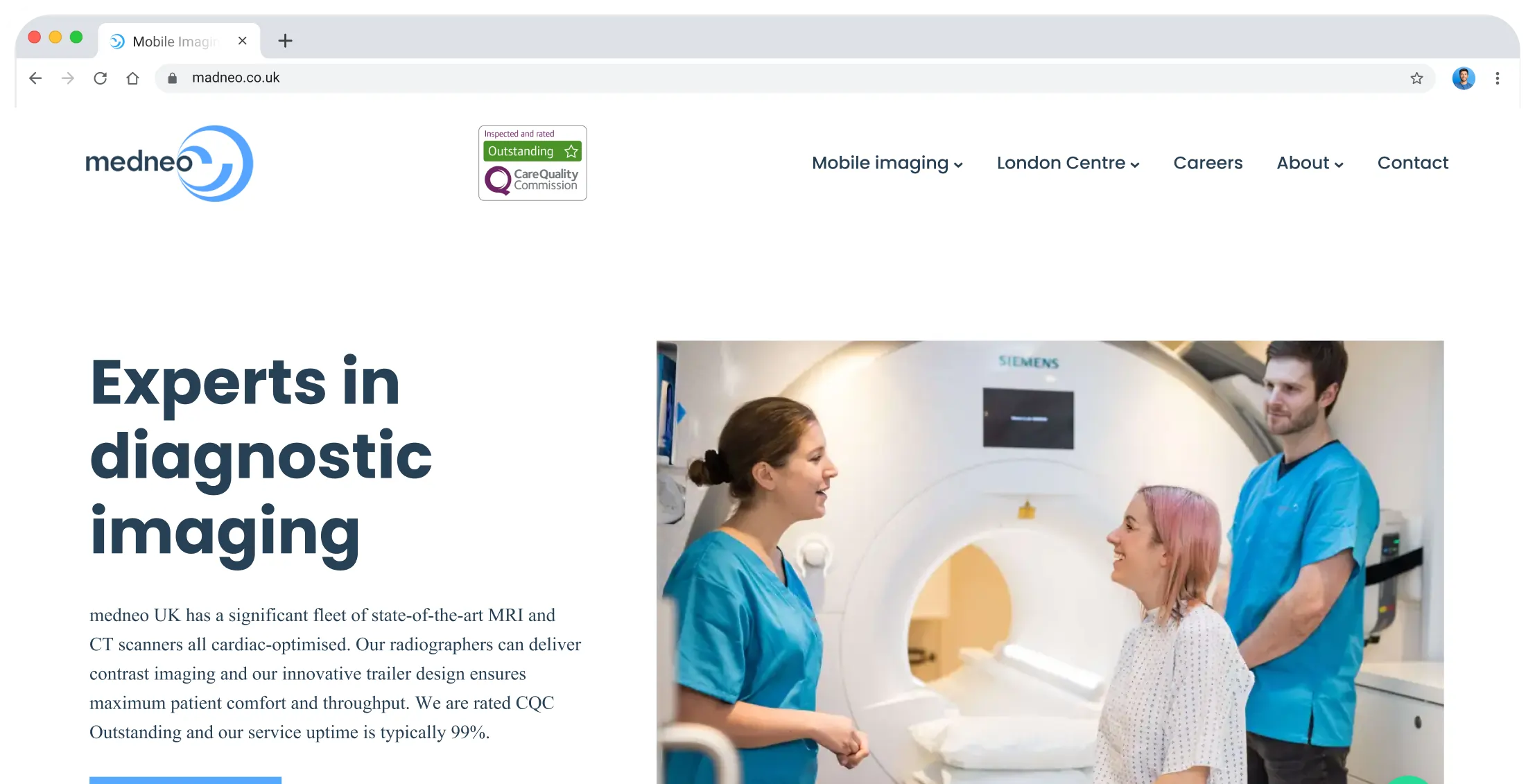
medneo works based on the “radiology as a service” model, providing MRI and CT scanning services across Germany and the UK. At the core of its operations is a bespoke Radiology Information System (RIS) that manages patient workflows, scheduling, reporting, and operational processes across imaging centers. As patient volumes increased and new features were added, the system began to experience performance degradation and regression risks.
Team
8
Engineers (Backend, Data, QA, DevOps)
Tech stack

Power BI

Microsoft Azure

Azure Data Factory

SQL
Objectives
The client engaged us to:
- Improve RIS performance under growing load.
- Reduce regression risks during feature expansion.
- Modernize legacy components.
- Enable reliable, faster releases.
- Ensure long-term system scalability.
The goal was to improve performance without disrupting active diagnostic operations.
Challenges
- Increasing patient load causing slower response times.
- Legacy frameworks limiting scalability.
- Inefficient database queries and redundant calls.
- Regression issues with new features added.
- Lack of automated deployment and delivery processes.
Engineering strategy
Work was structured around three principles:
- Optimize before expanding.
- Modernize without destabilizing.
- Automate delivery to reduce regression risk.
Our approach
Step 1
Code optimization
We conducted a full technical audit of the RIS to identify and eliminate performance bottlenecks. The scope of work included:
- Refactoring inefficient backend logic.
- Removing redundant database calls.
- Optimizing data access layers.
- Improving query performance.
Step 2
Technology stack modernization
Legacy frameworks and libraries were upgraded to stable, performant versions.
- Outdated components were replaced.
- The database structure was improved.
- System compatibility with the Azure infrastructure was enhanced.
Step 3
CI/CD implementation
To reduce regression risks and improve release confidence:
- Designed and implemented CI/CD pipelines.
- Introduced automated validation before deployment.
- Standardized release workflows.
Engineering outcomes
- Significantly reduced average system load times.
- Improved system stability during feature releases.
- Lower regression risk.
- More predictable deployment cycles.
- Optimized database and backend performance.
Business outcomes
Faster system response
Improved user experience for clinical staff and operational teams.
Increased reliability
Fewer disruptions during new feature rollouts.
Scalability for growth
The system can now handle increasing patient numbers without proportional infrastructure cost growth.
Reduced development overhead
CI/CD automation lowered manual release effort and minimized production risk.
Client
success
Partnership with Flyant enabled medneo to stabilize and scale its Radiology Information System while continuing to expand its diagnostic services.
The optimized and modernized infrastructure now supports growing patient volumes and evolving feature requirements without compromising operational reliability.
This case demonstrates Flyant’s capability to modernize and scale mission-critical healthcare systems operating under real-world load and regulatory constraints.
Facing similar challenges to medneo?
